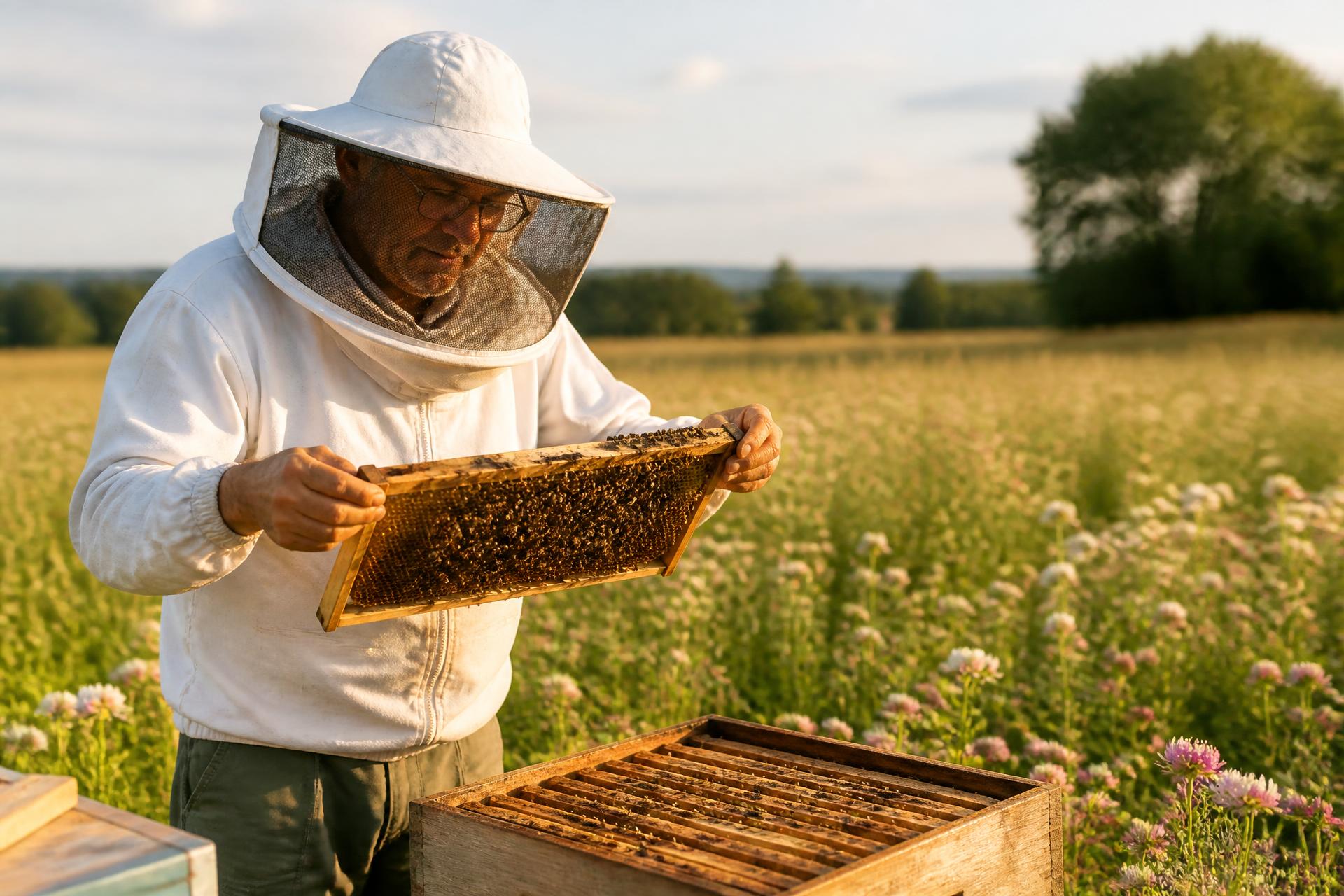
A beekeeper in a white veil lifting a honeycomb frame from a wooden hive in a field of flowering clover at golden hour

The economic engine for pollinator protection

Build a future for every bee.

Honey bees power the economy. Native bees need the habitat.

Saving bees requires more than a slogan. It requires a system.

Adopt The Bees connects people to real honey bee hives, local beekeepers, honey products, conservation projects, scientific information, and measurable local action.

Your participation helps support the managed honey bee economy while helping fund the habitat, native plants, nesting resources, research, and community work that wild bees need.

Your Planet. Your Impact.

20,000+
known bee species worldwide
4,000
native bee species in the United States
75%
of global food crop types depend on pollinators
$235–$577B
annual global crop output at risk from pollinator loss

These are scientific and agricultural facts from published sources, not Adopt The Bees impact metrics. IPBES Global Assessment · FAO Pollination · USGS

Which bees?

Everyone says “save the bees.” Very few people are told which bees, what is happening, or what actually helps.

The word “bee” represents more than 20,000 known species around the world.

Honey bees are one managed species. They are essential to agriculture, honey production, and the commercial pollination system. Native and wild bees are a much larger and more diverse group. Many live alone, nest in soil, tree cavities, stems, or natural landscapes, and depend on specific local plants and habitat.

Those two realities are connected, but they are not the same.

The honest solution is not to choose between honey bees and native bees. It is to build an economic system around the managed side that helps finance the conservation work required on the wild side.
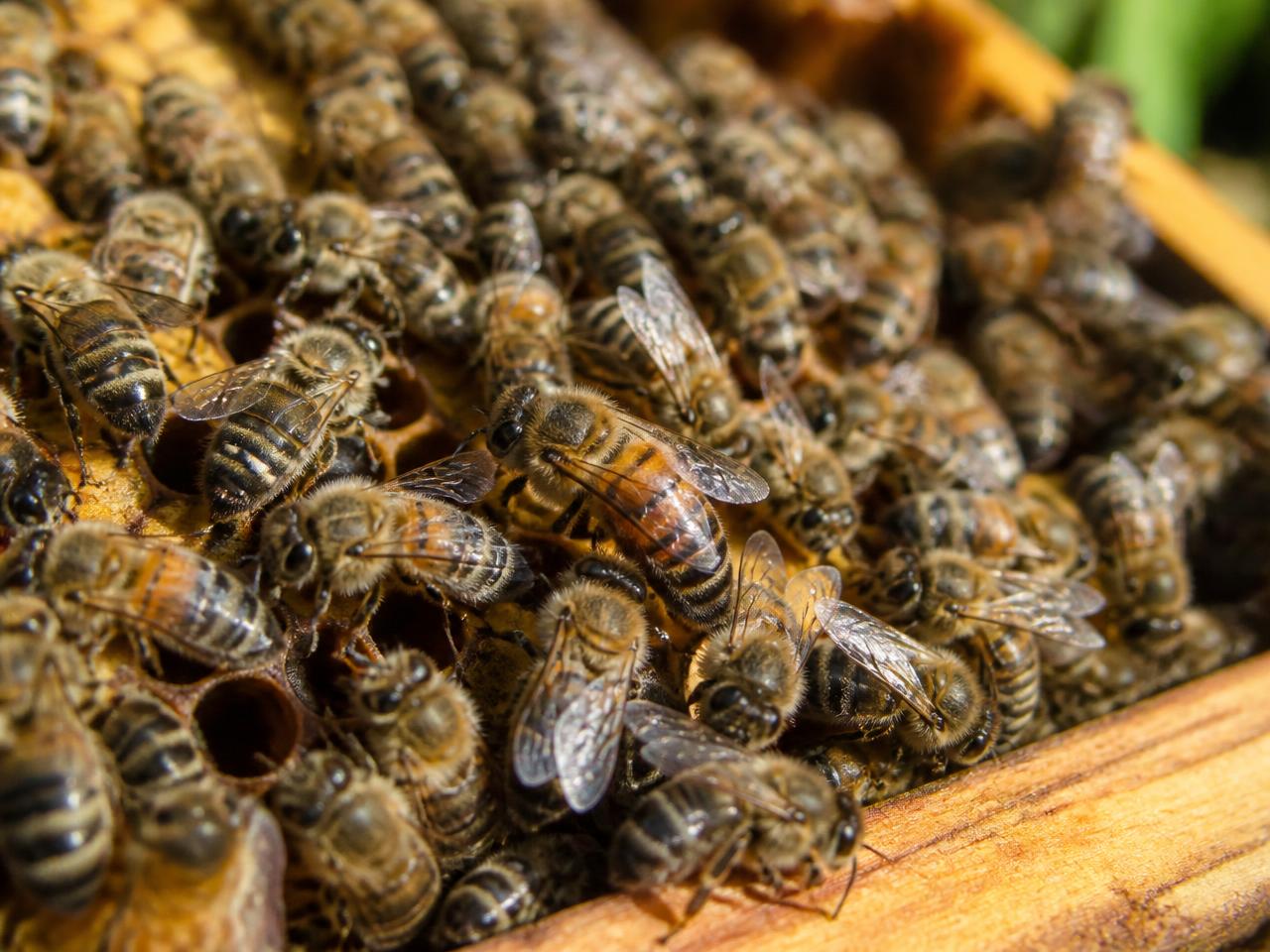
Western honey bees (Apis mellifera) covering a wooden frame of honeycomb inside a managed hive

Managed honey bees

Apis mellifera, kept by people

Honey bees are managed by people and connected to real economic activity:

  • Honey
  • Beeswax
  • Pollen
  • Propolis
  • Pollination services
  • Beekeeping jobs
  • Local food systems
  • Consumer products

They can be monitored, cared for, adopted, and connected to revenue.

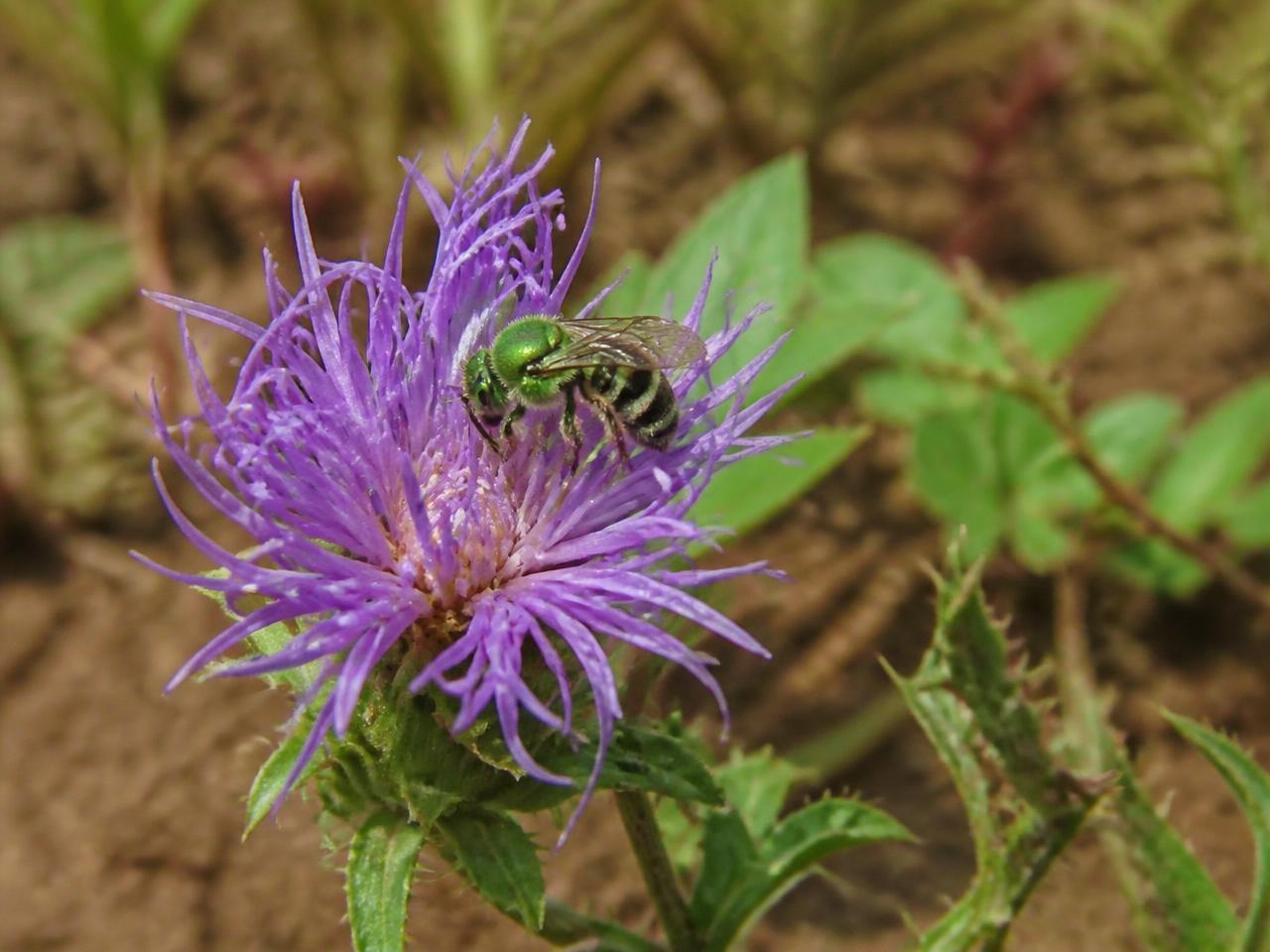
A solitary native metallic green sweat bee feeding on a purple native wildflower above bare soil

Native and wild bees

Thousands of species, mostly solitary

Native bees are part of the broader ecosystem and often depend on:

  • Diverse native plants
  • Continuous bloom periods
  • Local nesting habitat
  • Bare soil and natural ground
  • Dead wood and plant stems
  • Safer pesticide practices
  • Climate-resilient landscapes
  • Species monitoring and research

A managed hive alone is not native-bee conservation. Habitat is.

What happened to the bees?

The problem is not one collapse. It is a system under pressure.

There is no single global number that accurately describes the condition of every bee species. Different bees live in different places, depend on different plants, and face different threats.

But the evidence is clear: pollinators are under increasing pressure from habitat loss, reduced plant diversity, intensive agriculture, pesticides, disease, parasites, climate change, drought, wildfire, and fragmented data.

  1. 01

    Habitat loss

    When flowering plants disappear, bees lose food and nesting opportunities. The U.S. Geological Survey reports that approximately 30–50% of native bees are highly specialized. If the plant a specialized bee depends on disappears, the bee can disappear with it.

    Source: USGS

  2. 02

    Fewer flowers, less diversity

    Pollinators need food across the entire season, not one short bloom period. Lawns, development, land clearing, and simplified agricultural landscapes can remove the diversity of plants bees depend on.

    Source: FAO Pollination

  3. 03

    Pesticides and agricultural stress

    Pesticides, herbicides, fertilizer use, and intensive land management can reduce flowers, affect bee behavior, and add stress to already vulnerable populations.

    Source: IPBES Global Assessment

  4. 04

    Parasites, pathogens, and colony losses

    Honey bee colonies are also under serious management pressure. According to the latest USDA Honey Bee Colonies report:

    • 454,890 U.S. honey bee colonies were lost from January through March 2026, equal to 16%
    • 321,910 colonies were lost from April through June 2026, equal to 11%
    • Varroa mites affected 26.3% of reported colonies during April–June 2026

    These are managed honey bee colony-loss statistics, not native-bee extinction statistics.

    Source: USDA Honey Bee Colonies 2026

  5. 05

    The data gap

    Some regions and species are well studied. Others are barely documented. The latest European assessment estimated that 10% of European wild bee species were at risk of extinction: at least 172 of 1,928 assessed species. Fourteen percent remained Data Deficient. We cannot protect what we do not know exists.

    Source: IUCN European Wild Bee Assessment

The numbers that matter

Real problems require real numbers.

20,000+
Known bee species worldwide

The word "bee" covers a very large and diverse group of species.

FAO Pollination · Reviewed September 2026

4,000
Bee species native to the United States

Honey bees are not native to North America.

USGS · Reviewed September 2026

75%
Of global food crop types depend on pollinators

IPBES Global Assessment · Reviewed September 2026

35%
Of global crop production by volume is affected by pollinators

IPBES Global Assessment · Reviewed September 2026

87 of 115
Major global food crops are enhanced by pollinators

FAO Pollination · Reviewed September 2026

$235–$577B
Annual global crop output at risk from pollinator loss

IPBES Global Assessment · Reviewed September 2026

10%
Estimated share of European wild bee species at risk of extinction

At least 172 of 1,928 assessed species; 14% remained Data Deficient.

IUCN European Wild Bee Assessment · Reviewed September 2026

30–50%
Estimated share of native bees that are highly specialized

USGS · Reviewed September 2026

454,890
U.S. honey bee colonies lost during Q1 2026

Managed honey bee colony loss, equal to 16% of colonies. Not a native-bee extinction statistic.

USDA Honey Bee Colonies 2026 · Reviewed September 2026

26.3%
U.S. colonies affected by Varroa mites during Q2 2026

Managed honey bee colony health data.

USDA Honey Bee Colonies 2026 · Reviewed September 2026

These numbers describe the broader scientific and agricultural context. They are not Adopt The Bees impact metrics. Our platform metrics are reported separately, with dates, locations, sources, and verification status.

Sources & Methodology →

What we are building

A consumer platform for the global bee economy.

Adopt The Bees makes it possible for ordinary people to participate in the bee economy and understand the bees living around them.

People can explore the bees in their region, find a real hive, support a local beekeeper, learn about native species, volunteer, purchase bee-based products, and follow measurable progress.

The platform connects

  • Consumers
  • Beekeepers
  • Local communities
  • Honey producers
  • Conservation projects
  • Researchers
  • Schools
  • Farms
  • Corporate partners
  • Citizen scientists

Why honey bees are the economic engine

The hive is the economic engine. Habitat is the conservation outcome.

Native bees are essential, but most native bee species do not produce a widely marketable product or generate paid pollination revenue at the same scale as managed honey bees.

Honey bees create the revenue

  • Honey
  • Pollen
  • Propolis
  • Beeswax
  • Pollination services
  • Hive adoption
  • Local experiences
  • Corporate sponsorships
  • Educational programs
  • Bee-based consumer products

Native bees need the work markets skip

  • Native plantings
  • Habitat restoration
  • Nesting resources
  • Pollinator gardens
  • Local species monitoring
  • Citizen science
  • Responsible pesticide education
  • Conservation research
  • Community education
“We are not claiming that a honey bee hive automatically protects native bees. We are building a model where the managed honey bee economy helps pay for the habitat and conservation work that native bees require.”

How it works

How the money moves.

  1. 1

    People participate

    People adopt or support a hive, purchase honey or bee products, subscribe, volunteer, or sponsor a local project.

  2. 2

    Beekeepers and local operators earn

    Revenue supports responsible hive care, local production, maintenance, pollination, and community participation.

  3. 3

    The platform tracks the activity

    Each campaign shows its status, location region, beekeeper or host information, project description, and available updates.

  4. 4

    Conservation work is funded

    Program funding can support native plants, habitat, nesting resources, monitoring, research, and education.

  5. 5

    Results are published

    We show what was committed, what was deployed, where it went, and what has been verified.

The exact allocation for each adoption, subscription, sponsorship, or product is shown before checkout and in the impact ledger. We do not use “100% goes to…” claims or fixed percentages unless the allocation is actually configured and verified.

How we are different

We know the difference between a hive and an ecosystem.

Adopt The Bees is being built by people with direct experience across commercial beekeeping, pollination, hive monitoring, bee sales, honey sourcing, and honey brokerage.

We are building the missing infrastructure between people, bees, beekeepers, products, data, and conservation.

Built from real operating experience in the bee economy.

  • Consumers want meaningful action but cannot see where their money goes.
  • Beekeepers operate real hives but lack a modern consumer and funding layer.
  • Conservation projects need long-term support and better visibility.
  • Scientific information is fragmented across institutions, regions, and databases.
  • Bee products generate economic value, but that value is rarely connected transparently to conservation.

How people participate

There is more than one way to help.

Adopt or support a hive

Support a real community hive and follow its story. Participation does not mean legal ownership of the physical hive.

Find a Hive

Start a hive

If there is no hive near you, start a campaign in your city or community.

Start a Hive

Buy from the bee economy

Honey, pollen, propolis, beeswax, subscriptions, and other products create recurring economic activity around responsible beekeeping.

Explore Products

Volunteer

Plant habitat, help at events, document bee sightings, contribute skills, support education, or join citizen science without paying.

Volunteer

Adoption flow

Explore → Select → Learn → Adopt → Confirm

Volunteer flow

Explore → Find an Opportunity → RSVP → Participate → Track Your Contribution

The bee globe

Start with the bees around you.

Our interactive globe lets you click any country to see documented bee species, representative native species, habitat guidance, pollinator plants, and any hives or projects nearby. Where records are thin we say so instead of inventing numbers.

Impact preview

The numbers describing the problem are not the numbers describing our work.

What we report

  • Hives funded
  • Dollars deployed to conservation
  • Native habitat supported
  • Native plants planted
  • Nesting sites created
  • Volunteer hours
  • Bee observations submitted
  • Species records added
  • Active cities
  • Beekeepers participating

Every metric has a state

Committed
Funds or work pledged to a specific campaign or project.
Deployed
Funds or work actually sent to the beekeeper, project, or program.
Verified
Confirmed on the ground with a date, location region, and evidence.

Impact reporting will appear here as projects are verified.

Questions

Straight answers.

Does adopting a honey bee hive automatically save native bees?
No. Honey bees and native bees are different. A managed hive alone is not native-bee conservation. Our model uses economic activity around managed honey bees to help fund habitat, native plants, nesting resources, monitoring, education, and research for native bees.
Are honey bees endangered?
Honey bee colonies face serious management stress from parasites, disease, nutrition challenges, pesticides, and other pressures. However, honey bee colony loss is not the same thing as saying all bee species are going extinct. Native and wild bees require separate conservation attention.
Where does my money go?
Each campaign explains its operating costs, beekeeper support, platform costs, conservation allocation, and verification status before checkout. The impact ledger shows what has been committed, deployed, and verified.
Do I own the physical hive?
No. An adoption or support payment supports the campaign and the work described on its page. It does not transfer legal ownership of the physical hive unless a separate agreement says otherwise.
Can I help without paying?
Yes. Volunteering, habitat work, education, species observations, and community participation are always available without requiring a purchase.
Is Adopt The Bees a nonprofit?
Adopt The Bees is a for-profit platform. Purchases are not tax-deductible donations unless a specific charitable partner and eligible contribution are clearly identified.
Read all questions →

Sources & methodology

The public statistics on this page come from the sources below. Platform impact metrics are reported separately with dates, locations, and verification status.

The future belongs to more than one bee.

Support the hives that power the bee economy. Help build the habitat that keeps native bees alive.

Adopt The Bees is a Save The Bees project (A Save The Bees Project). We are building the infrastructure that connects bee-based economic activity with measurable pollinator protection.